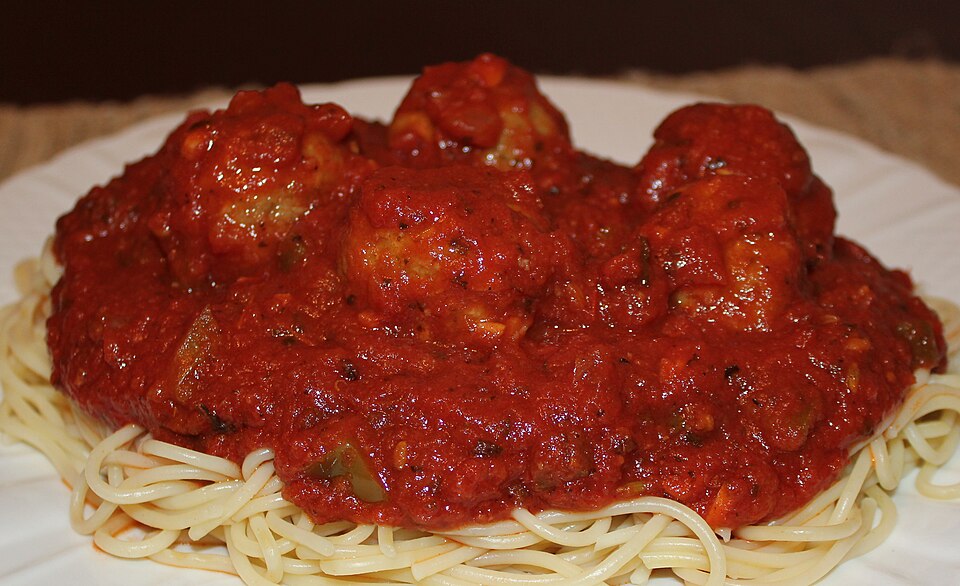
Home › Food list › Spaghetti
Spaghetti at a glance
Glycemic load / serving
18
medium
Nutri-Score
A
A best, E worst
NOVA group
–
1 = unprocessed
Serving used for glycemic load: 1 cup spaghetti not packed (124 g).
Spaghetti nutrition facts
| Nutrient | Per 100 g | Per serving |
|---|
| Calories | 158 kcal | 196 kcal |
| Protein | 5.8 g | 7.2 g |
| Carbohydrate | 30.9 g | 38.3 g |
| Fiber | 1.8 g | 2.2 g |
| Sugars | 0.6 g | 0.7 g |
| Fat | 0.9 g | 1.2 g |
| Saturated fat | 0.2 g | 0.2 g |
| Sodium | 1 mg | 1 mg |
| Potassium | 44 mg | 55 mg |
Lower glycemic load alternatives
Other pasta & noodles with a lower glycemic load per serving:
Common questions about spaghetti
Is spaghetti low glycemic?
Spaghetti has a glycemic index of 49, which is low (low is 55 or under, high is 70 or over). The glycemic load of a 1 cup spaghetti not packed (124 g) serving is 18, which is medium.
Is spaghetti good for people managing blood sugar?
Glycemic load is the better guide, because it accounts for portion size. A serving of spaghetti has a glycemic load of 18 (medium). Eating it with protein, fat or fiber slows absorption further. This is general information, not medical advice; people with diabetes should follow their clinician's guidance.
How many calories are in spaghetti?
Spaghetti has 158 calories per 100 g, and about 196 calories in a 1 cup spaghetti not packed (124 g) serving.
See the glycemic load of your whole meal
Photograph your plate, scan a barcode or say what you ate. NutriOptio grades every food for glycemic load, Nutri-Score and processing, weighted to your goal.
Open the free web app
Sources and method
Glycemic index: NutriOptio's reference table, compiled from the University of Sydney GI database and the international tables of glycemic index and glycemic load; the range reflects variation across studies, ripeness and preparation. Nutrition: USDA FoodData Central, SR Legacy, “Pasta, cooked, enriched, without added salt” (FDC 169737). Glycemic load = GI × available carbohydrate (carbohydrate minus fiber) per serving ÷ 100. Nutri-Score computed with the 2017 general-food algorithm.
General information, not medical advice.
Glycemic load explainedGlycemic index guideNutri-ScoreNOVAAll foods