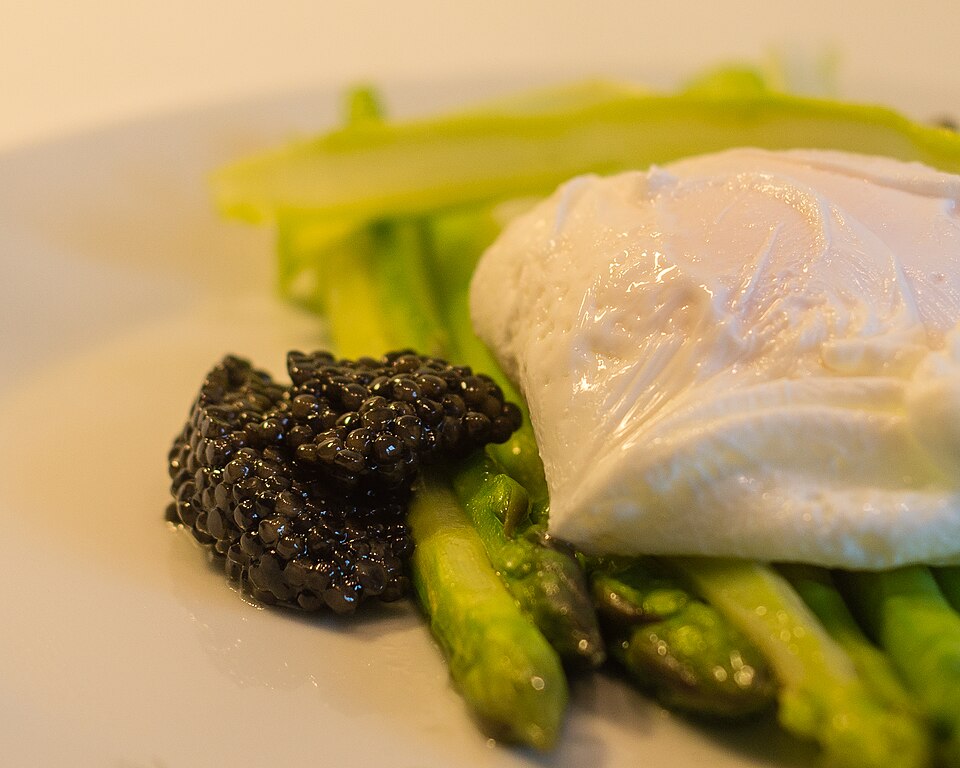
Common questions about poached egg
Does poached egg raise blood sugar?
Poached Egg contains almost no carbohydrate, so on its own it has very little direct effect on blood glucose. Its glycemic load is 0.
How many calories are in poached egg?
Poached Egg has 143 calories per 100 g, and about 72 calories in a 1 large (50 g) serving.
Is poached egg processed?
Poached Egg is NOVA group 1: unprocessed or minimally processed.
See the glycemic load of your whole meal
Photograph your plate, scan a barcode or say what you ate. NutriOptio grades every food for glycemic load, Nutri-Score and processing, weighted to your goal.
Open the free web app
Sources and method
Glycemic index: NutriOptio's reference table, compiled from the University of Sydney GI database and the international tables of glycemic index and glycemic load; the range reflects variation across studies, ripeness and preparation. Nutrition: USDA FoodData Central, SR Legacy, “Egg, whole, cooked, poached” (FDC 172186). Glycemic load = GI × available carbohydrate (carbohydrate minus fiber) per serving ÷ 100. Nutri-Score computed with the 2017 general-food algorithm. NOVA group 1 follows from the NOVA definition: a whole food, only cleaned, dried or cooked.
General information, not medical advice.
Glycemic load explainedGlycemic index guideNutri-ScoreNOVAAll foods