Lechon: Calories, Glycemic Index & Nutrition
Lechon is mostly protein and fat, so NutriOptio gives it a glycemic load of 0 per serving. NutriOptio estimates one serving (100 g) at 300 calories, with 30 g protein, 0 g carbohydrate and 20 g fat.
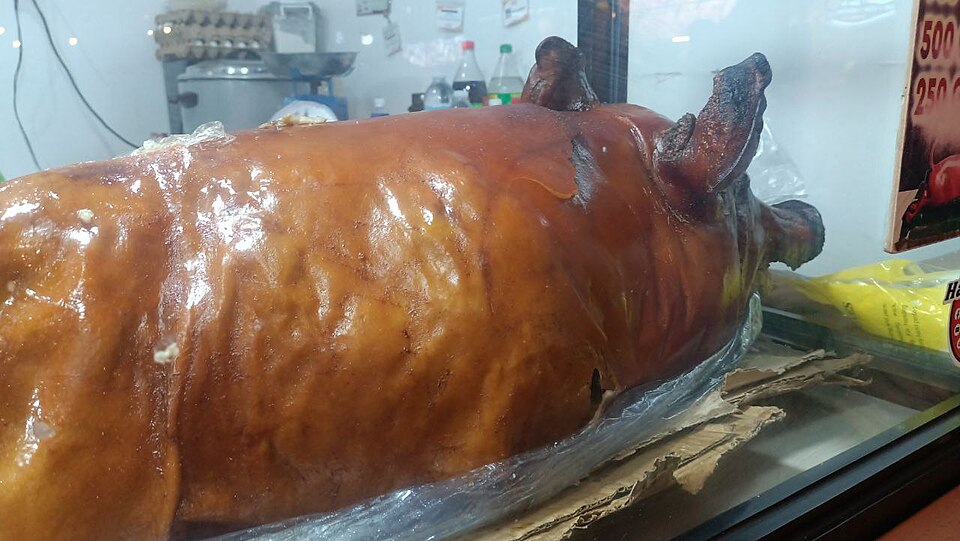
Lechon is mostly protein and fat, so NutriOptio gives it a glycemic load of 0 per serving. NutriOptio estimates one serving (100 g) at 300 calories, with 30 g protein, 0 g carbohydrate and 20 g fat.
Southeast Asian cuisine · Vegetarian · Vegan. Serving: 100 g.
| Nutrient | Per serving |
|---|---|
| Calories | 300 kcal |
| Protein | 30 g |
| Carbohydrate | 0 g |
| Fiber | 0 g |
| Sugars | 0 g |
| Added sugars | 0 g |
| Fat | 20 g |
| Saturated fat | 7 g |
| Sodium | 600 mg |
Typical ingredients: whole roasted pig, salt, pepper, garlic, vinegar, soy sauce, bay leaves, lemongrass
| Dish | GL / serving | kcal / serving |
|---|---|---|
| Tempeh | 0 | 192 |
| Bak Kut Teh | 1 | 350 |
| Rendang | 1 | 250 |
| Sisig | 1 | 350 |
| Sinigang | 3 | 200 |
NutriOptio estimates 300 calories in one serving (100 g) of a typical lechon recipe. Your recipe and portion will change this.
NutriOptio grades a typical lechon D on Nutri-Score, where A is the best and E the lowest nutritional quality.
Your recipe is not the typical one. Photograph your plate or describe it, and NutriOptio grades your actual portion for glycemic load, Nutri-Score and processing.
Open the NutriOptio web appThese are the values the NutriOptio app gave for a typical lechon in October 2026. They are AI estimates and can change as the app is updated; search the dish in the app for its current estimate. Calories and nutrients are NutriOptio's AI estimate for a typical recipe and portion. The glycemic index is NutriOptio's reference value for this dish, estimated from its carbohydrate ingredients; glycemic load is computed from it and the serving's carbohydrate. Home and restaurant versions vary, sometimes a lot. General information, not medical advice.
